- Living the Dream
- Posts
- What Happened to the Energy you Started the Year With?
What Happened to the Energy you Started the Year With?
Why burnout isn’t about doing too much — and how to enter this year differently

Amir Lehrer
December 31, 2025
Welcome back.
We’re just hours away from stepping into 2026, and for many of us, that brings mixed emotions.
Hope.
Intentions.
And if we’re honest — a quiet skepticism too.
Not because we don’t want things to change,
but because we’ve stood at this moment before.
As Jews, we already have Rosh Hashanah.
But life doesn’t move in neat spiritual chapters, and real direction needs regular check-ins — moments where you step back, zoom out, and ask:
Where am I actually going?
I take these moments seriously — Rosh Hashanah, my birthdays, and yes, January 1st too — not to make promises, but to get honest.
This week’s note isn’t about motivation or resolutions.
It’s about something much quieter — and much more important.
Take a breath before you read it.
Wishing you the best,
Amir
What Happened to the Energy you Started the Year With?
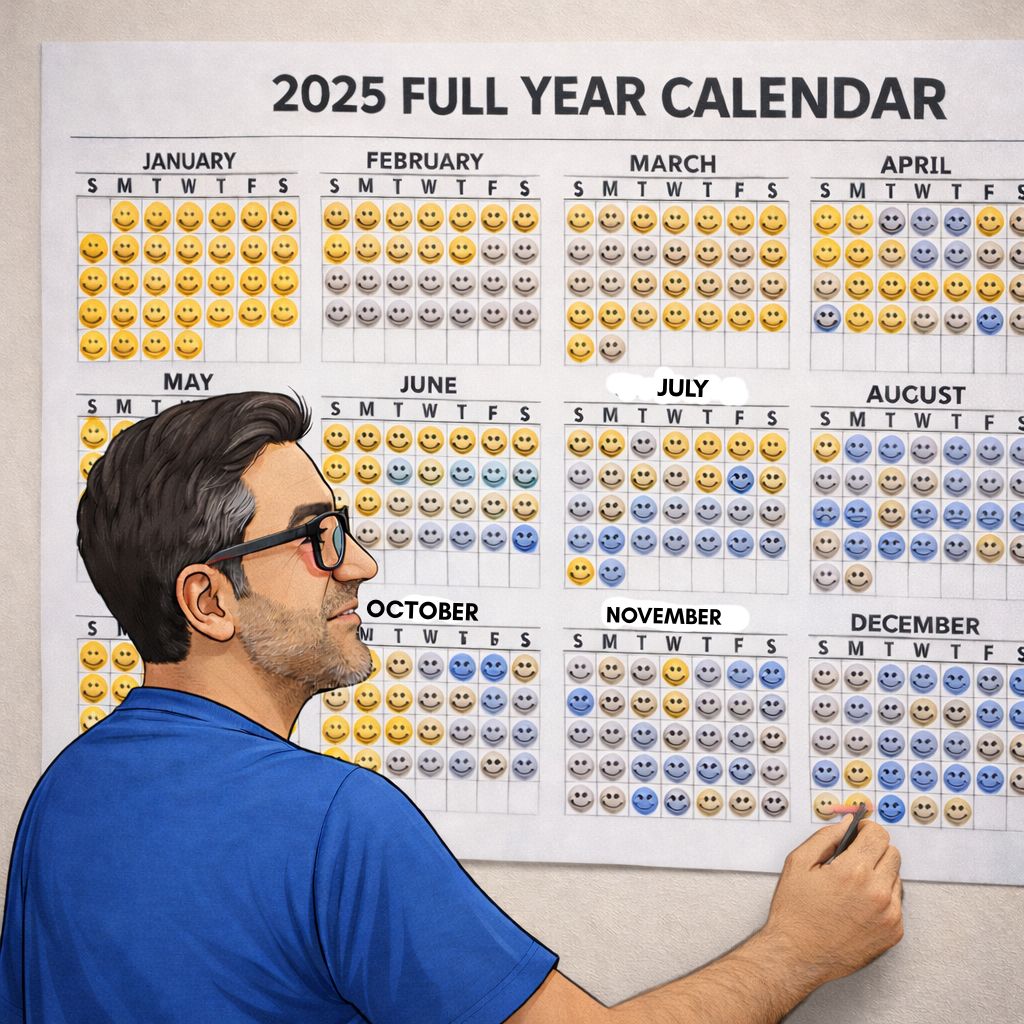
There’s a quiet moment that happens at the end of the year.
Not when you look at the calendar…
but when you look at yourself.
You remember how this year started.
The excitement.
The plans you genuinely believed in.
The sense that this time things would move.
And now, standing at the end, you’re not devastated.
You’re something harder to name.
Tired.
A little numb.
Quietly disappointed… not just in how things went, but in yourself.
You didn’t quit.
You didn’t stop trying.
But somewhere along the way, the energy drained out of the process.
And you find yourself asking a question you don’t say out loud:
“Where did all that potential go?”
This Is the Part We Usually Skip
We jump straight to motivation.
To resolutions.
To “next year will be different.”
But if we’re honest, the pain isn’t about a year ending.
It’s about the pattern you’ve lived before:
You start hopeful.
You start strong.
Life pushes back.
And slowly, daily… the weight builds.
Until effort feels heavy.
Consistency feels like pressure.
And even things that matter start to feel exhausting.
The Belief Under the Burnout
Here’s the part no one really says:
Burnout isn’t always from doing too much.
It’s often from carrying too much.
Underneath the exhaustion is usually a belief you don’t realize you’re holding:
If I slow down, I’ll lose momentum.
If I stop pushing, it won’t happen.
If I let go, things will fall apart.
That belief doesn’t feel toxic.
It feels responsible.
But it comes at a cost.
Because when you believe outcomes rest on you…
your nervous system never gets permission to rest.
Anxiety is what happens when responsibility turns into control.
The Shift That Changes Everything
And once you name that honestly, you can finally hear something deeper.
There’s a line we say in Kedusha of Shabbat Musaf (Nusach Sefard):
‘הן גאלתי אתכם — אחרית כראשית.’
Redemption comes when the end mirrors the beginning.
And there’s a pasuk about Eretz Yisrael that says Hashem’s eyes are on it:
“מֵרֵשִׁית הַשָּׁנָה וְעַד אַחֲרִית שָׁנָה.”
From the beginning of the year until the end.
But notice something subtle.
At the beginning it’s הַשָּׁנָה — the year.
Full of meaning. Full of possibility.
Hope. Vision. Plans.
By the end it’s just שָׁנָה — a year.
Not because Hashem changed…
but because we changed.
We get worn down.
We carry more.
We tighten our grip.
And slowly the year stops feeling like the year —
it starts feeling like “a year I’m ready to be done with.”
What the Pasuk Is Really Telling You
But the pasuk is telling you something steadying:
Hashem’s attention doesn’t fade.
His eyes are there at the beginning —
and they’re still there at the end.
Not less.
Not weaker.
Not distracted.
So when we feel alone, it isn’t because Hashem stepped back.
It’s because we quietly stepped into a mindset that says:
“If I don’t hold this… it won’t happen.”
“If I don’t push… it will fall apart.”
And that’s the shift that drains us.
What Geulah Actually Is
That’s why geulah isn’t hype.
It’s alignment.
Effort stays.
Pressure drops.
You keep showing up —
without gripping the outcome.
When effort remains…
but the inner pressure is released.
When responsibility stays…
but control is handed back to where it belongs.
You do the work.
Hashem carries the outcome.
That’s not passivity.
That’s Bitachon.
Not “doing less.”
Just stopping the inner weight that drains you before the year is over.
A Personal Truth
I’ll be honest with you.
I’ve been working toward a new direction in my life and business for almost a year and a half now.
I’ve tried a lot.
I’ve had real ups… and real downs.
Things are not exactly where I once thought they’d be.
But I’m not discouraged.
I’m clearer.
Because I’m no longer confusing effort with control.
And that shift alone changes how a year feels while you’re living it.
The Question That Actually Matters
So as we step into a new year, here’s the question that actually matters:
Not: How do I stay motivated all year?
But: How do I keep going without burning out again?
The answer isn’t hype.
And it isn’t pressure.
It’s daily, quiet trust.
The kind that lets you act fully…
without carrying what was never yours to carry.
An Invitation
If this resonated, I want you to hear this clearly:
You’re not broken.
You’re not lazy.
You’re not failing at faith.
You’re tired of doing this alone.
If you want a calm way to start differently, I put together “Calm in the Chaos”, a gentle 7-day Bitachon reset:
one email a day, a short practice, and one small shift in trust.
However you step into the new year, you don’t have to carry it by yourself.
Hashem’s got you.
If one person came to mind while reading this, trust that. Forward this message to them.
They can subscribe here:
Wishing you a year filled with growing Bitachon.
Amir